Saturday, February 25, 2012

A Year In Review

     Well trying to follow my resolution to blog once a month so here we are again. February 3rd or 4th was the official mark of living in Zambia for a year. The bigger benchmark will come end of April when I've been in the village for a year, the halfway point of my service. It's crazy how time passes.
     The month of March is full of programs.The new education volunteers are down in training right now. They're where I was a year ago. Next week I head down to Lusaka to help with the training. I'll be there for some exciting parts: when they find out where they'll be living the next two years, Supervisors workshop, and when they prepare for site visit to their village. From training I'll head to Central Province where there's the National meeting for Camp GLOW (Girls Leading Our World). I'm excited to hear about how the other provinces have done their camps and generally just love girl empowerment programs. Then I'll head back to my village where a couple of days later the four new Kaonde volunteers will come to visit for 5 days. So that's what my life for the next month or so looks like... 
     But according to the title of this blog post I should be reviewing some of the past year... So here are some tidbits from here and there: 
* Mwinilunga Visit: I live in Solwezi district of Northwest. About 200 km down the road to the west is Mwinilunga District. I've lived in the village for nine months and figured it was about time that I explore a bit more. I caught the big bus (think greyhound, take it down a couple of levels, and add 20 more people than legal capacity and there you have it) out to Mwinilunga on a Thursday afternoon. Met up with Deanna, one of the other education volunteers from my intake. We met up with some other volunteers and just caught up over a couple of beverages. The next morning we started off early walking to the Trade Center for a meeting with the Director about holding the next Camp GLOW on his campus. The training center was farther than planned... and then we got soaked in a rainstorm during our walk, and arrived later than planned soaked. The location and facility is amazing and too good to pass  by, so pending any issues we have our location for our camp in December! Then we walked more, through thick mud, pushing one bike with us. (We needed to pick up another bike from another volunteers house.. but 20 + km later all we managed to do that day was crash that his house after eating a little feast (didn't really plan food provisions during our adventure). The next morning after 12 wonderful hours of sleep (yes we were asleep by 7 pm...) then we started the biking part of our venture. We biked from around Mwinilunga town to the source of the Zambezi. The road's unpaved and often washes out during rainy season making it impassable. So it's actually better to travel by bike... but still tough going, not to mention the bike I was borrowing only had the gears 2-4 to 2-6... the rest you had to manually change and brakes that rubbed like crazy. It all added to the value of the adventure. We got to the source, which is really anti-climatic. They have a nice center/museum area with information about the Zambezi river, a really nice board walk that is slowly rotting and sinking into the swamp, and then the source itself was a little muddy puddle. But when you think about the fact that this is the origin of Victoria Falls it's absolutely amazing. Having seen Victoria Falls in August, the thundering of water pouring over the falls and then jump forward to this muddy little puddle - CRAZY. Then we started off again - my legs were dead, I was getting annoyed with this bike that seemed bent on moving only at a sludge pace. But luck was on our side and a truck passed by right when we joined the road again and we got a ride for 25 km.. Leaving only 30 km or so to Mwinilunga Boma (town). Would not have made it back to town that day if not for that truck ride. Total we biked 75 km (Deanna had just gotten a bike odometer). We had one of the best cold showers ever and an amazing plate of fries and eggs. The next morning I headed back on the bus, spent from the trip, but worth all the effort seeing Mwinilunga and Ikelenge Districts and experiencing the even greener side of Northwest Province.
* Girls Club: We started our girls club beginning of January and things have been going really great! We've covered different topics such as HIV/AIDS, assertiveness, goals/dreams, and have recently been working on preparing two songs to present at Women's Day on March 8th. The girls clubs from Luamvundu (my school) and Lumwana East (my closest school where Audra leads the club) will sing "If you wanna be somebody" together and then each club will sing a song with just their school for the celebration of Women's Day. This week we're going to sew chitenge pads, using the skills the teacher's were taught during the camp. I got 40 washcloths for the final step of the pads today in the market. Girls when they are on their period often do not attend school or other events as they do not have any way of keeping themselves clean or maintaining themselves during their period. This means girls after puberty miss can miss up to a week of school every month.
* Reading Hour: This term working in partnership with Robyn, the wife of a miner at Lumwana East, we have been traveling to Nyansowe, my farthest school that is 15 + km away and on a washed away dirt road in the bush, to do a reading program with the grades 1-4. The main focus is simply to encourage a culture of reading, teaching the youngest pupils that reading can be fun and an interesting way to learn about different things.
* Penpals: I am mailing 58 letters written by the Grade 8's at Lumwana East to Mr. Babich's Grade 5 class in my hometown Northville, Michigan (note the grade difference because of English literacy levels in the village). My pupils have been really excited to have penpals in America and despite the struggle with writing letters and their English levels it is a program they love.
* General village life: Recently in the evenings I've taken to wandering. (Don't worry parents by evenings I mean wandering around 17-18 or so.) When James is in town I meet up with him and we wander by the river, around the market, or down a trail we found. Otherwise I visit Grace at the market, wander by the school, or just here and there. It's my final evening exercise to make sure I'm good and tired for bed and it's nice to meet and greet everyone as they travel home after a day's work. Most of my days are spent at schools: Lumwana East, Luamvundu, or Nyansowe mainly. But when I'm not at school or working on the program I've been working with the children in my family with their English language skills. We hang out in general, but they also come over for coloring pages or reading books from my basket. They also enjoy the occasions when I break out chalk and they use the board I painted with chalkboard paint. It's absolutely precious to watch the older children (age 8 and older) teaching the younger children the alphabet, words in english, and how to count. Love them.
Think that this is where I will draw this blog post to a close. It's getting late here and need to pack up before heading back to the village tomorrow. Hope that all is well with everyone and remember I love to hear from you how life is going and what you're up to in America.
Love,
~Andrea

Monday, January 23, 2012

January Addition

I don't even know where to begin. I realize I have been neglectful of my blog, last update was four months ago... so here you are family and friends. My New Years resolutions: operation hydration, eat at least one fruit, one vegetable, and one protein a day, and (drum rolllllll) make at least one blog post each month. So January addition coming at ya :)

As you can see I started a blog post while I was home in America but never did get to putting up all those pictures even though I had that wonderful high speed internet. So Americaland to begin with. It was oh so wonderful to see those of you I was able to catch up with and as always there is never enough time to catch up during the short bit that was the holidays so remember snail mail and the art of letter writing and I am also turning over the new leaf of being faster and better at writing everyone back that writes to me :) So many resolutions...

It was strange being at home because the first week it felt like Zambia had only been a dream, that it never really happened, everything about Zambia was just so distant. And then the second week rolled around and thankfully I got back the last year of my life and it all felt real again. Think looking at pictures, giving a Zambia talk to a classroom of fifth graders at my old elementary school, and acquiring things from America to bring back to Zambia made it feel real again. It is hard also on the flipside of things to think I was just in America less than a month ago. They are different worlds but both very redeemable with different highlights. I must admit I do love the rain or shine the sun comes out and stays out for most of the day. Unlike Michigan where I saw the sun perhaps 3 maybe 4 times while I was home. Could have acquired seasonal depression had I been there longer and not so caught up and loving seeing everyone again and in the holiday spirit. Words  cannot describe how wonderful it was to be with my family for Christmas Eve/Christmas and to be able to catch up in person, break out the onsie pajamas again.

And while it was really wonderful to see family and friends again and enjoy the delights of the modern world, it is also really good to be back in Zambia where the sunshines, the people are so friendly/giving of themselves, and to have purpose and direction working on my projects in the village again.

So you ask, what am I up to in the village these days? Well when not having parties in my kinzanza with my host family children reading the books my mom sent me (which they absolutely love, their eyes light up when I break them out), I am also up to a couple of things at the schools. I have decided my main focus areas are:

1. Girls Empowerment (as seen through my work with Camp GLOW, Girls Leading Our World, and the Girls Club in my village. We had our first meeting this past Tuesday. The girls voted and we will be called Girls Club, very original I know. During the club meetings we will talk about different health issues including HIV/AIDS, malaria, etc..., business skills, and various life skills such as leadership, self-esteem, etc... The girls seem very reception but a bit shy. Hopefully they will quickly warm to me and get used to the muzungu working at their school. This is my first project working at Luamvundu, the zonal school for my district. Previously my efforts have been focused at Lumwana East Basic.

2. Literary. Started a library club at my school and it's been going really well attendance wise. We've had anywhere from 60-100+ kids coming to look at the limited books we have at the school. We still need to work on increasing their literacy but starting with instilling a reading culture and interest/love of books. Books are really only seen at the schools as they are expensive for a villager and a luxury item. Along this same grain of thought Mr. Banda, the senior teacher, and I are developing a plan to build a library room or a completely separate library. We are still working out the details but created a materials list for both with most of the materials and general cost and quantity based on one of the school block renovations by the mine that we have the records from. Mrs. Comben's grade 7 class is also supporting us in this process and fundraising to build part of the library. We are hoping to receive a donation as well from the local mine. They have built several nice library buildings in the area at some of the local schools in their area of work. Feel like I'm reverting a bit back to my days of emergency home repair in rural West Virginia.

3. Learner centered methods. Or in other words teaching through other means just strictly the lecture based method. It is more difficult then it sounds because the children do not have textbooks to take home and study so they do need to write a fair number of notes down from the board so they have something to study off of. And because behavior change takes a fair bit of time. I have been co-teaching geography with Mr. Yambwana going on two terms now and hoping it is making some sort of change. I also teach TGMs (teacher group meetings) some Fridays to the teachers at my school about different topics: teaching and learning aids, classroom management, learner centered methods, etc...

So those are my main work focuses while I'm here in Zambia. Of course the other focus is cultural exchange which is an everyday activity. I must be going though, run some errands in town and then head back out to the village. This is hopefully the first of my now monthly updates!

Oh and this one is for you Dad - the word they call white people is muzungu or chindelli (something like that). The first one, muzungu is the kaonde, bemba, etc.. word and then chindelli is the lunda word. I have tried to teach the children my name so many times... newest approach is going to be to teach them my kaonde name - butemwe, it means love. The head teacher gave me my name and I have not used it. Chatting with a zambian friend in the village about the children always calling me 'white person' he was surprised I had not tried my kaonde name, as Andrea is not a common or known name in Zambia.

On that note, hope all is well in America and you are enjoying the snow!

Ten-Four
~Andrea

Sunday, January 22, 2012

Americaland!!!

Disclaimer: was distracted in Americaland by my wonderful family and friends, good coffee, great food, etc... so never got around to posting this... so it's incomplete but plan to get a January blog post in tonight/tomorrow.

     Sitting in the family room watching the snow drift down outside snuggled under a blanket because I find this country freezing in comparison to Zambia. Home for the holidays and loving catching up with friends and family! It's wonderful to have good coffee, great food, and the wide variety of conveniences of America/a developed country. I don't have to draw my own water, figure out how I'm going to charge my phone or ration the juice on my ipod. It's a nice break.
     And now since I have great internet speed and a constant supply to power going to try to upload some long overdue pictures to my blog!!

                                                 Camp GLOW (Girls Leading Our World)
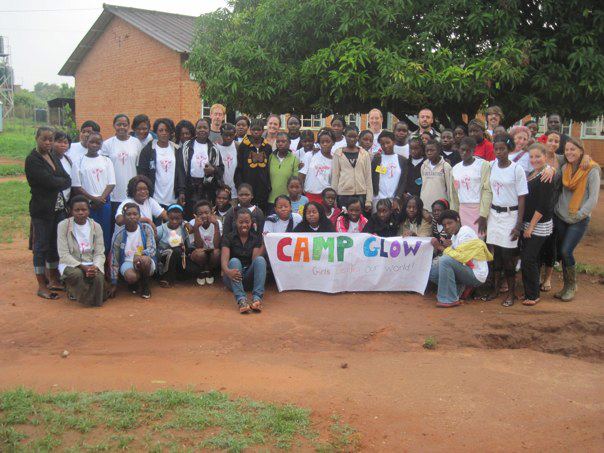
We held Camp GLOW the first week of December down in Kasempa at Mukinge Girls Secondary School. It's a week where two girls and one teacher from each volunteers school come together in a camp setting to learn about important issues including: girls empowerment, leadership, HIV/AIDS, other health issues, and business skills. The camp was a great success! Following the camp the campers and mentors will return to their villages and start their very own girls club to carry on the spirit of the camp teaching the girls they matter and can make a difference in their villages and communities by being positive role models. A special thanks to my mom who supplied the girls with their journals and the crafty supplies to make it their own as well as all the other supplies she donated and packed into those packages! Running a camp in a developing country is not without its challenges but the girls experiences were invaluable!


                                     Checking in celebration: left to right - Kim, Kelly, Me, Sarah

Monday, September 26, 2011

     My blog title gives the false illusion that I am riding my bicycle here, there, and everywhere. The truth is I am protesting. It's hot season right now and during the day from the hours of 10 am - 4 pm if there's no breeze that day all you can do is find a nice place to lie. I have not ridden my bicycle in the last two weeks or so; which I'm lucky for the fact that I live near a mine because there's plenty of transport that I can flag down instead of sweating up the hills, the joys of living by a river, it truly is uphill both ways... and I'm not talking small hills. Anyways, this doesn't mean that I don't do any work during the days. Actually most days I'm at the school until around noon and other days I try to continue doing work by laying in my hammock reading education materials/lesson planning/etc..
     I feel like every time I make a blog entry I comment on how I've been MIA on the blog front.. but this I think is the longest I've gone without updating you all. Sorry, and at this point many of you may have lost interest after my lack of updating. I know I would get frustrated when my sister was abroad and I'd visit her page multiple times only to find out that she had not graced us with her presence. There's a multitude of excuses: things have been busy, don't have electricity/my computer at my hut so I do have to wait until I get into town, but even so the main reason is I do not have a clue where to start. So much has occurred and I already found it difficult enough to try to describe my experience now I find it next to impossible. But have to start somewhere so here are some life updates.

* Zambia has a new president! President Sata was inaugurated into office on Friday. All of last week we were on standfast in our villages (standfast=you must stay in your villages and not come to your provincial town where the PC house is or travel anywhere else). The elections were held at the school on Tuesday and then the results were announced shortly after midnight, early Friday morning. The previous party had been in power for 20 years so many Zambians wanted a change in office but feared the the elections would be rigged.  There were isolated incidents of violence/car burnings in the waiting period before the results were announced because of the fear of an unfair election. From the media that I have heard or seen since the announcement of Zambia's new president they are holding Zambia as an example not only of how fair elections can occur but also how the ruling power can peacefully step down from office. I am glad that we had a fair and relatively peaceful election.

* I built an outdoor oven/grill. With all the hype and excitement around the election school did not occur at all this week so on election day Audra and I finally built an oven at my hut! Two of our Zambian friends also helped us a fair bit.. meaning we probably would have been lost without them. So now we have a fully functioning oven with a top that can be used as a grill. We broke it in on Friday night grilling black bean burgers and baking brownies. Think I'm going to like the ease of baking with an oven instead of having to use the double boiler system on the brazier to bake bread. There are plans to bake pumpkin bread (thanks mom and dad for the fall celebration birthday package :) and for our Christmas celebrations to bake cookies. There seem to be endless possibilities but this also means I need to find a charcoal supplier. I'm always running low and then out before I can locate someone that has charcoal within carrying distance.

* I have a newly thatched roof!! I had some great skylights there for a couple of weeks :) The star gazing was great, the bat squeaks interesting, but the impending rains made it a little nerve wrecking in addition to having to live my life out of containers because everything within the hut would be covered in grass and dirt. The roof looks great. So the story for why I needed a new roof; basically the wrong type of grass was used, the kind of grass that bugs love, so wood weevils ate my beams and so they had to be replaced as well. Now all that's left is to put up some black plastic on the inside against the thatch to cut down on dust/allergies and also to make up for a couple of areas where the sunlight sneaks through.. meaning rain will have a hay day raining within my hut.

* School life: I walk to Lumwana East Basic School almost everyday. I am co-teaching grade 8 geography with Mr. Yambama the science and geography teacher for grade 8 and 9. We just wrapped up teaching about weather and now are moving into teaching about Zambia. We co-teach instead of teach alone following the rationale that it's more sustainable to work with a counterpart and then the teacher you work with practices using student centered learner methods in the classroom while you teach together and then carries on teaching with a variety of methods instead of the standard write the notes on the board and lecture mode. It's been going well when school happens but I find my largest frustration to be the fact that there are so many things that stop school from occurring or from pupils teaching. But that's a separate vent session. Last week we taught about wind speed and direction. They needed to learn about a wind anemometer that measures wind speed but all we had was a black and white picture in the one book my teacher has to teach geography from, so we got creative and made pinwheels to demonstrate how the anemometer works. The following day I made I demonstration model wind vane to demonstrate how you can find out the direction of the wind from an instrument none of them have ever seen. The weather instruments are only found at the weather stations in Zambia and there is definitely not one located near our village. I was proud to see my co-teacher and I already using hands-on methods in the classroom, he made a flipchart diagram of other information for both lessons. He seems to be excited about bringing new ideas into the classroom which is refreshing especially after spending an entire term observing things at the school, getting to know everyone, and figuring out what the community needs help with the most. It's really good to finally be doing something. Integrating into the community was and is essential but refraining from teaching was slowly driving me crazy.
     So you might be wondering... what else are you up to besides teaching grade 8 geography. Well, let me tell you about the other projects I have planned for this term. I am starting a literacy club where we do a read-aloud, the children will have access to the 40-ish books we have in the storage room, we'll do a follow up activity from the book, and then they can visit the station of their choice. The main goal is to promote the joy of reading and also improve the English literacy skills of pupils. We're starting the club the first week of October, reading "The Giving Tree" by Shel Silverstein. It's a bit of a challenge to find quality children's literature over here...
     I'm also working on the World Map Project. I'm making a map of the world on the side of the school that faces the road. It's a source of community pride if you have a nice map on the side of your school so it's best to have it visible from the road. I scrubbed the wall clean and then painted it white (half of it was blue). When I get back to site it'll all be painted blue and then my artistic skills will be put to the test. It's based off of a grid system so supposedly you don't need to be artistically inclined. Don't get me wrong I love arts and crafts time but never been particularly talented on the sketching or drawing realm, so we'll see. It'll be great to have the world map there though because of the lack of text books at the school their world knowledge especially geography of where different countries are is a bit lacking through no fault of their own.
     The grade 7's and grade 9's have their national exams this term. Grade 7 and 9 are the only grades given national exams and they must pass their exam in order to continue their education. There are a group of motivated pupils that get together and study off of the previous exams. Audra and I have started to do exam review/study session help where we work together through the difficult problems or questions. It is a bit tricky because the tests don't always test what is being taught in the schools. Also they focus on very detailed specific questions such as asking in detail the function and how it works of a froth flotation instrument that uses chemicals and air pressure to separate pieces of copper from other materials. Good information to know if you're going into mining and perhaps to learn at the secondary school or even university level but I am failing to understand why a rural grade 9 pupil needs to know these details when they will likely never encounter such a machine and have never learned about it in class. I completed the grade 9 geography exams paper one and paper two and found myself struggling with the obscure questions as well as vague maps that you are supposed to identify information from. The pupils have the struggle of being educated in rural third world conditions but also of being tested on irrelevant and trickily worded exams. So we're making the best of what the situation because I can make a difference in teaching the children in my school zones but I will not be able to affect the national policy or write new exams for them. An additional struggle exists in the fact that each grade and subject has a specific national syllabus that states all information that should be taught. Which is really great! But the Education Office does not have copies of the upper grade subjects and so teacher do not have access to that information and therefore struggle with what is important to teach and what needs to be focused on.
     I also started a PenPal program in our school with the grade 7 pupils. Unfortunately it seems my classrooms letters have been lost in the mail as I mailed them the end of July and they have yet to arrive in Michigan for Mr. Babich's Grade 5 students to read and reply to.. which is just disappointing. The pupils worked really hard on their letters, writing a first draft and then revising, even drawing pictures. But coming to realize you simple must roll with it so will get in contact Mr. Babich and see if his pupils can write us introduction letters...
     Another point of focus is teaching at TGMs (Teacher Group Meetings). We have them 'every week' which breaks down to about 7 or 8 times a term, which is a lot better than most schools who do not meet at all or once a term. I am teaching on 5 different topics at Lumwana East Basic, started with Student Centered Learning and will cover other things like making education relevant to the child, literacy help, classroom management, and the list goes on. There are 5 government schools in my zone and I plan to visit each school and teach at least one TGM for their teachers. I have already visited the schools to introduce myself and ask the teachers what topics they would like me to present on.

* Another main project is planning Camp GLOW (Girls Leading Our World). They held the first girls camp for Northwest Province last April and we are holding the second camp in December to accommodate schedules better. Which means the timeline is short and there are many things to do in the meantime. Which is actually why I'm at the house. We worked on some GLOW points today and tomorrow I'm headed down to Lusaka for a two day Training of Trainers where myself, two other PCVs and the Zambian Facilitators who are helping at the camp all come together and we get everything squared away for the sessions we're holding at the camp. The main focus of the camp is girl empowerment and education. Each volunteer involved will bring two girls and a Zambian woman teacher to attend the camp; upon returning they start a Girls Club with the help of the PCV.

There are many other life updates but I have grown tired of typing so I'm going to take a break, post this and add another update soon! Hope life is grand stateside and everyone is enjoying a bit of fall for me :)

Saturday, August 6, 2011

Time Keeps Rolling On

"Live in the sunshine, swim in the sea, drink the wild air" - Ralph Waldo Emerson. That was the quote on my birthday card from Heather and Matthew last year. Time is a crazy thing. It's hard to believe that a whole year has passed, yet at the same time so much has happened this past year - in my life and those around me. Today I am a year older - 24- seems to hold a lot of potential with work I have planned in my village, with relationships I have formed during my six months in Zambia, and to top it off I even get to see my family in December!! WIth all the potential and excitement of my life in Zambia there is also the realization that life is continuing for everyone stateside. Friends have gotten engaged and married, a friend has a beautiful baby girl, my sister graduated college, friends have moved across America, I realized my sister has been married going on two years this month. Everyone's experiencing milestones while I'm half way across the world. I knew this would happen, no way to freeze time but it's a little bit different knowing versus experiencing it. 6 months of changes and 21 months remaining (I'm really not counting but April and I were excited about our six month anniversary in country on August 3rd).

Back to my opening quote: Definitely up to the two ends of that quote. The African skies are indescribable and unlike any other sky. It can't be captured by film but is best enjoyed by bicycle rides especially when the sun is beginning to set after a full day. And I think many of you know my love of fresh air: be it driving with the windows down whenever possible even a little crack during the cold Michigan winters (mostly just when I'm alone... so as to not torture my passengers) or simply my love of the outdoors and backpacking. I get plenty of fresh air the only time the supply is cut off are the occasional hitch/ride either bwana with air conditioning or minibus style packed full with people and non-functioning windows. Rides or classrooms full of children on hot African afternoons. But even inside my hut where I'm currently pen and papering my blog entry still able to "drink the wild air". Unfortunately I haven't swam since my arrival in Zambia. My favorite place in Zambia so far hands down is Mutanda Falls. About eighty kilometers from my hut on the way to Solwezi. A perfect little place tucked away a little where you can enjoy the rushing water and a cold beverage. The main issue with water starts with the fact that Zambia is a landlocked country. But there are several main rivers. The other issues with swimming involve crocodiles, poisonous snakes, and in calm waters schisto (waterborne disease). But, traveling to Victoria Falls end of August and plan to get my fill of water and swimming there.

I haven't made a blog post in quite some time. Community Entry (first three months at site) has been completed. Meaning now I'm allowed at the Peace Corps House in Solwezi. Which means four days a month I should have internet access. Peace Corps is different than anything I expected. I live in rural Africa but I also live next to the largest open pit mine in Africa. I live in a mud hut but I also live right off the tarmac. I eat local food: nshima, bishu, and soya, but most often I eat food bought from the Shoprite grocery store in Solwezi; groceries that I then carry back to my site in my backpacking bag about twice a month. I get by mostly by speaking English; because of the mine many Zambians around know English well and most of my village/community is Lunda. A little bit of an oversight by Peace Corps. I thought I'd be the only white person and only Peace Corps Volunteer for kilometers. There is a geology exploration camp two kilometers from my hut with Australians, British, Irish, and Canadians. The closest PCV, Audra, a health volunteer lives 7 kilometers from my hut and I see her almost everyday because we both work at the school, share the same market, and frequently have dinner parties/sleepovers. So I am out of touch with the world. I hear news on my static shortwave radio or from the geologists when I run into them, and I have to walk to the top of the hill to have clear phone reception. But I also have internet on my phone for the first time in my life. The month of July was busy and I did not make it on my computer once to use internet, definitely was a process to clear the inbox the first time I went on in August. My life exists in extremes. I either have too much time to think about life or no time to process at all. I go from my mud hut attempting Lunda cooking over a brazier to Solwezi with a pizza place, shoprite, and the PC house full of other Americans. The disparity of my worlds is a constant adjustment. But with the passage of time more and more of everything is becoming the new 'norm'.

And it's on that note that I must depart. I will see what Lusaka has in store for me. Heading out early tomorrow morning for a two week training down in the capital. I will try to update a couple more things on my blog - had plans for this one to also include more about community entry and my schedule/plan for September the beginning of a new school term. Love you all back at home and take care.

Sunday, June 5, 2011

Non-verbal Communication

Typing this up in my hut so I can post it when I go to Solwezi. Laying under my bugnet typing my written out journal entry  by candlelight. It seems like a collision of two different worlds using my computer right now in my mud hut in rural Zambia. Well anyways, onto the rest of my entry before my computer battery dies. (Talked about the juxtaposition of our lives last night with April. It's crazy that you can wake up in your hut living village life, interact with a variety of people from the Home for the Aged, to the Sports tournament where I am the only muzungu to then end the day sitting around a table with a bunch of other American Peace Corps volunteers in the city enjoying electricity and small joys like refrigeration and being able to order food. Such is my life for the next two years..)

26 May 2011 - Human Interaction:
It's amazing that you can be connected to another person when there is no verbal communication. The elderly woman who lives on my compound, the grandmother of the Kumwana Family, visits my hut everyday just to check in. She's one of the family members I feel closest to but we've never exchanged more than a simple greeting and thank you. She'll come over we'll greet with the traditional handshake, clap, handshake, clap; that will be followed by our no longer awkward (well at least less awkward) silence when we stare at each other for anywhere from a minute to an hour if she decides to sit and watch me. We share a laugh as we determine we're both just as lost as the day before on understanding the other. When our interaction is completed then she'll get up, I say nasakilili (the Lunda word for Thank You) and then she returns to her sitting area by her hut. She understands that I have a very limited understanding of Lunda and she seems to have no knowledge of Kaonde or English so we're at a bit of loss on the conversation front. Today she said something about my drying rack not being finished and gestured that I was running low on charcoal; or at least that what my charades skills led me to beleive. I wonder if this will continue for the next to two or if I will acquire an ability to understand her in Lunda before my Peace Corps service is completed. She makes me feel welcome and like I am a part of her family and  like I am a part of her family which is amazing because we've hardly said a word to each other. Learning there are so many other ways that people communicate besides the straightforward method of speech.

Hot Waffles: I am in temporary ownership of a Zambian puppy named Hot Waffles. he's about 3-4 months old and has quite the personality. Every time I try to leave my hut he somehow knows and shows up out of nowhere from playing the the neighborhood kids or stalking a chicken. Then it's a little game of how long will a Zabmian child hold the dog before he thinks he's going to be bitten. Considering Hot waffles doesn't enjoy being held against his will and he's a teething puppy the answer is never long enough. If I'm lucky eventually an adult will step in and the the dog, I'll give up and hope he gives up when I ride my bike away, or I'll bring his leash (rope/collar I made out of pcord) and have a little boy hold onto him while I'm in my meeting or playing sports with the schoolchildren. He knows he's not supposed to follow me to because I'll turn around give him a look and point my finger - he stops dead in his tracks and as soon as I start to walk farther he continues to trot after me. But other than our little struggle with him staying home when I go to work it's nice to have someone around with me at my hut and doesn't require much more than some food, water, and stick to chew on. While I'm talking about dogs I should also mention that dogs in Zambia are treated much differently than dogs in America. Dogs in Zambia are generally left to fend for themselves for food and water and there is the general idea that if you beat the dog he becomes a better guard dog. There is also the issue of rabies which in the states there are significantly fewer stray dogs and I there is not the issue of having access to the vaccine or having money to pay for the treatment like there is in Zambia. So what I'm getting at is that Zambians are definitely scared of dogs, they are taught at a young age to stay away form them. When I first brought Hot Waffles to my house no children visited for a good week. Now my family has gotten used to him, the boys love to play with him, and the other children have caught on that if they run away from him he will chase them. And now that I've spent a significant amount of time talking about a dog... let's move onto some of the work I've been to in Lumwana.

I'm in community entry which means for the most part I'm not supposed to be starting work but moreso observing lessons in the schools, integrating into the school, my family, and the community as a whole. I've been working on getting to know the teachers at my school, getting to know the kids and have them get used to having me around, meeting different contacts in the community, trying to find potential projects, and also keeping my eye out for potential friends. Two years is a significant amount of time and I intend on doing what I can to truly intergrate.

There are 6 schools in my zone that I can potentially do work at. Five of them are government schools and one of them is a community school. The government schools are funded by the government as the name would imply and then the community school is funded as best it can be by the community where the school has been built. When I first learned about community schools I had a hard time wrapping my head around it; I still struggle. Community schools came about in the 90's for a couple of reasons there was/is overcrowding at the government schools, there are some children that cannot pay school fees (even though grade 1-7 is 'free' there are still PTA fees, uniforms and shoes are also required to attend school), and sometimes the distance to the closest government school is 5k plus (which is a substancial distance especially for younger pupils). The reason community schools were started is logical and I commend all the communities that have pulled together enough to buy/create the supplies necessary to build a school block so that their children (or the vulnerable children/orphans) can attend school. The issue that I have difficulty wrapping my head around is that even once the school block has been built the government still does not provide funding or donations of any sort to the community schools. There are numerous other hoops they must jump through before they can be considered for funding which if a community school is lucky and plays their cards right they can hope to receive funding in some capacity years after the school has been in operation. We had a session on Community Schools during pre-service training where we learned all of this background information and many of us questioned why the government didn't do more to aide the schools. They have development goals for 2030 and there is a focus on the education of its people and this does not seem to be fulfilling that goal properly. The explanation we received was the the government simple does not have the money to support these additional schools. They can be officially acknowledged by the government if they reach certain standards and if they reach a high level of operation the the government will provide them with funding. I know that Zambia is a developing country, the rural government schools are also struggling with funding and they are given funds from the government/teachers there are salaried by the government, but leaving community schools on the outside still seems cold to me. There has to be money somewhere in the national budget that could be reallocated towards at least covering the salaries of a couple of teachers for each community school. It's a harsh reality that the right to an education remains 'a good idea' that has yet become a reality to those living in rural poverty in a third world nation.

So I have started to get familiar with the different schools in my zone to assess potential projects and counterparts for my PC service. I've still need to visit two of the government schools, they are located further out down a dirt road, working with the Head Teacher (think Principle) at my closest school, Lumwana Basic, to  coordinate a visit to them. Of the other schools I have been working the most at Lumwana Basic, it's about 800 meters from my hut, a quick little 5-10 minute walk when you factor in the hill. I've been mostly observing lessons of all the grades 1-9 at the school getting an idea of how the lower grades are taught and then trying to identify a potential counterpart to co-teach with next term. I've gotten a good idea of how lessons are taught at the different grades and by the different teachers, almost all teaching is based on lectures, copying notes, and repetition of facts. That's one of the focuses of my job is to introduce learner centered activities into the classroom such as stations, small groups, pair-share, etc.. I am still working to find a good counterpart for co-teaching with because I'm looking for someone that teaches upper basic (my original focus was on gr 7-9); focusing on the upper grades because they have a better understanding of English and will be able to understand me better when I teach. However there is an issue of teachers leaving for town because they are writing exams or doing coursework for their degree. Teachers often do a distance learning program while they are teaching to work towards their diploma (the teachers have their teaching certificate but diploma is a seperate affair). The hitch is that they need to go to town in order to type up their work, sit for exams, or attend class; subsitute teachers do not exist in Zambia (at least not in the rural areas I have not observed classrooms in urban areas). If the teacher leaves then it is up to the other teachers to cover that teacher's class or the pupils are left to sit without instruction for the day. Corporal punishment is also not a thing of the past. It's technically illegal according to a law that was passed I think in the last 10 years or so. There is no one that enforces this law in fact I am pretty sure the law is not even widely known amongst teachers. There is also the question as to what is considered corporal punishment. Many Zambians have the view that corporal punishment is necessary in some circumstances to get through to the pupils. As an American raised in a completely different environment this is another one of those difficult ideas to understand. Taking it from the Zambian perspective you teach how you have been taught, which also includes the way you discipline your students. In no way am I accepting corporal punishment or saying that it is okay for them to hit or pinch children's cheeks when they do not provide the right answer or are considered to be disrupting the classroom but there is a different culture here and part of the issue is that an alternative method of discipline needs to be instigated such as postiive reinforcement and finding the root of the problem for the child's lack of understanding. The issue of hitting children exists at my school, not school-wide but with a couple of the teachers. I have not figured out how to deal with this issue completely yet. I will not work co-teaching with a teacher that in anyway harms a child. For this reason I am continuing my search for a couunterpart and thinking about expanding my search to include grades five and six. I want to confront the teacher(s) and have a discussion with them about their use of corporal punishment; but it has been recommended to me that I develop a relationship/repoire with the teacher(s) first and then breech the concept of corporal punishment and potential alternatives. This is hard to do when I go to their classrooms to observe a lesson and a child is hit or pinched. Trying to bide my time, it is a gray area, but sooner rather than later something needs to be done; I just need to figure out a way to breech the topic keeping communication open and do so in a way that they will be willing to try positive reinforcement, and other non-abusive methods of discipline. There are great things going on both at the school and in the community but just as everywhere else there are also areas of improvement.

Onto positive events. I have started working at the Community School. The school is 4 km away, it's all uphill on the way there but the great thing is once you get there you know it's going to be a breeze getting home - you hardly even have to pedal :) The school is one classroom block, the school was started in 2003 primarily because of the distance to the government schools in the area and  because of the cost of attending the government schools. The school teaches grades 1-6; there are currently 2 teachers there that teach mostly as volunteers. There are small school fees of 15 pin - equivalent of 3 USD per term. However there is a large orphan/vulnerable children population and many of the pupils cannot pay the fee. The fee is intended to provide the teachers with a stipend for the cost of living so that they can support themselves; I'm not really sure how they get by but I think mostly because Zambians especially in rural areas live with their extended families and take care of each other is the only way I figure that it works for them to be 'volunteer' teachers at the community school. The teachers at the school are not certified, they have attended government school through grade 12. I had a meeting at the Community School a couple of weeks ago with one of the teachers and a counterpart in the community that works closely with the community school. I learned the specifics about the school and a bit about their needs. Then last week I had a meeting with their executive board, the community members that run and oversee the overall operation of the community school. It was interesting because the entire meeting had to be translated from English into Lunda or vice versa for the board to understand me and me them. I explained my role as a PC volunteer and what I would be able to help with (education, teaching method/knowledge) and what I would not be able to help with (building teacher housing, funding the school, becoming a full time teacher at their school) and we decided that I would best used if I started to teach English class once a week to the 6th graders. I started teaching there on Monday morning. The teacher with classes in the afternoon came in the morning to translate for me and I started to work teaching the grade 6's and the grade 4's; they share a classroom and currently neither grade has a teacher because the third teacher at the community school recently left for actual employment. Together we created an alphabet teaching and learning aide that we could hang above the chalkboard in the classroom. I created an outline of each of the letters the night before on cut-up flipchart paper. We went through the different letters of the alphabet which most of them already knew, they each colored in their letter (those crayons you sent are sure getting their use mom), I gave them a pre-test of 25 sight words to see the level all the pupils were at, and then we finished the class with the children drawing a picture to go with each of the letters of the alphabet (a is for apple, b is for boy... t is for tree... w is for well) and then we hung the letters in order in the front of the classroom. It was a fun lesson and served mostly as a gauge as to where the pupils are at since I had not met them before and only had the information that they should know the alphabet but not sight words to go on. The challenge now is to keep this up. I know I need to start with a focus on phonics but do not really have much/any information on teaching phonics. I also don't think phonics is a strong suit of mine, hooked on phonics as a child, speech class in elementary school, sounds like I'd be a great person to teach young impressionable children how to speak English properly. But looking around they don't even have a teacher right now... something is better than nothing.. and I've come a long way from my childhood self.. if you have any suggestions for teaching phonics or potential materials to use that would be amazing. I have access to the web/printer every couple of weeks. Wishing now I had brought more of my teaching materials from college - and that I had sorted through them better when I was stateside so I could actually remember which books were helpful and which weren't. So that's Community School take one. Take two next week - planning on doing a vowel/consonant review/focus for the fourth graders and getting the sixth graders started on a phonics chart which they can then teach the 4th graders how to use and introduce more sight words..

This week I also had an information meeting for an Adult Literacy Class. We held the meeting in a church over by the community school, near where my counterpart that side also lives. He told me the community was interested in learning English. I told him I could help - I'm supposed to work in the community once a week and have been keeping my eyes open for potential projects - also hoping to look into women's groups through a contact with my nearest PC volunteer neighbor. We set a time and date, this past Thursday at 14 and he took care of spreading the word and there was a great turn up. It was just an introductory meeting to gauge interest, assess the literacy level of the attendees, and gain a general understanding of the idea of Adult Literacy class. We're planning to meet every week on Thursdays at 14 at the church. The literacy levels range from very beginning - being unable to write their own name, to advanced including my counterpart who translated the entire meeting into Lunda for everyone. At the end of the meeting we had 24 people signed up for the class but my counterpart told me to expect even more next week as the word spreads. We'll see how many people really stick with it. I'm pretty sure we're going to have to have separate meeting times for each group: beginner, intermediate, and advanced. My hope is to have everyone meet at the same time and to have separate groups - different activities going on at the same time. Some people learning the alphabet and how to spell their names, others site words and simple phrases, others tenses, others practicing conversations? Somewhat wondering what I've gotten myself into but know that I just need to take my time and see how everything unfolds and what ends up being the best set-up for the class. Everyone wanted to meet at least twice a week which I would love to do.. but also trying to make sure I don't spread myself too thin for when I start co-teaching at the school, get involved in clubs, continue working with the girls football team/playing some football and volleyball myself, and then try to create a literacy program at the school. Everything sounds like a great idea but the reality of the situation is sinking in. There is plenty of work to be done but need to decide to focus on particular projects and hope there is time for others later. Glad to have this problem over not being able to indentify any counterparts or projects that I can contribute to in the community. It's been a bit over a month at site and I feel like I'm getting a good handle on things but know there is still far more to experience and learn and that I'm only just now beginning to see the shape my service will take for the next two years. I'm very hopeful and excited about the different potential for so many things but am trying to hold myself back and continually remind myself that these ideas are great but I need to check myself to make sure the projects I want to work on are indeed what the community wants, that they can remain sustainable after I've gone (or been worthwhile in the meantime in the case of adult literacy haven't figured out how to make that project sustainable), and remind myself that everything I want to do is going to infinitely longer than I expect. I'm living in a rural village without electricity, I get around by foot and bike, everyone in the community is also busy with their own lives, and change takes a substancial amount of time. I hope two years will be enough to accomplish some of my primary goals. Time will tell.

Just went into print preview and realized that I just typed something shy of 6 pages.. guess this one's going to be a long entry. Especially since I'm not done yet. If you're still with me way to go :)

I live by a very large mine. Which means a couple of things: there's great transportation when I'm trying to get into town, my market at the top of the hill has far more in it's tuck shops than other areas since it's by a mine turn-off including a refrigerator where I can get cold softies and an amazing shop has started stocking cheese for myself and Audra (I know living a bwana life for a volunteer) (but can only indulge every once in a while on my PC budget), and it also means that there's a budget around for things like sports tournaments. The tournament starts tomorrow and the whole thing includes somewhere around 6-10 schools that live in the area that the mine operates. Tomorrow we're playing Nalaga School in girls football, boys football, netball (only girls really play netball), and volleyball (apparently co-ed but think we only have boys right now..) The mine is going to transport them from our school to Nalaga for the tournament. We play different school next week at our school, the following week is semi-finals, and then finals. The advantages of living by the mines. Without transport non of this tournament would be possible not to mention the organization provided by the mine is clutch for the games actually occurring. So for the last week we have had sports practice everyday of the week. Usually sports is only Monday and Friday afternoon. We've also been working on forming a girls football team. Traditionally the boys play football the girls play netball. So I was really excited when this opportunity presented itself as many of you know i love playing soccer and the opportunity to introduce the girls to it made me very excited! The first sports practice that I went to they introduced me to netball (a game that combines basketball and rugby together.. we play on a dirt pitch which is probably why basketball has not been adopted and they throw the ball to their teammates but cannot run with the ball the objective is to get to the net (basketball net without the mesh net portion)  and then they shoot one handed. There are addition rules with how many steps/shuffles you can take when you have the ball that I'm still working on getting down) . After playing some netball then we started a small game of soccer on on the netball pitch. I thought they'd know the rules and be good at football since football seems to be an obsession with Zambians (turns out gender roles it's the men and boys that play football. It was a great laugh 'playing' football that first practice as the girls attempted to kick the ball missing left and right, hammering the ball out of bounds, handballs galore, but the most I had laughed in a long time (and I consider laughing a great pasttime). They have come really far from that first practice - some of the men from the community football team have been coaching them. I started off attending their practices and then turned into more of an assistant coach of sorts. The community coaches are better qualified considering their soccer abilities are superior to mine, they can instruct the girls in Lunda their native language, and they have known the girls for longer. But I'm sticking in there. I provide the ball (possibly the best thing that I brought from the US), provide addtional instruction when I can, and most importantly show them that girls can play football; I may not be as good as the Zambian men in my village but I can handle the ball well enough to set a positive example for the girls. That's the hope at least. Sports provides a positive outlet for the girls, keeps everyone at practice out of trouble they could otherwise be getting involved in if bored in the village (no t.v.'s, limited access to books, plenty of chores... ), it keeps everyone active, and what I love the most is it creates a sense of community amongst everyone on the fields. Yes there are separate teams you have the boys football team, the newly formed girls football team, the community football team, the girls netball team (pretty much the same girls as football), and the co-ed  although mostly male volleyball team that included pupils and community members. I play football with the girls sometimes and almost always join in playing volleyball but I also love just sitting there watching everyone play their respective sport sitting with Hot Waffles in my lap and the little children all staring at me because I'm the village muzungu (white person). One of my favorite parts of village life so far. (Lumwana First Games of the tournament was yesterday - we won in Netball, Boys Football and tied in Girls Football and then I had to leave before volleyball was over so I could make it to town before dark. Next weekend we're hosting a different school at our school compound. Keep ya updated :)

Must wrap this up and catch some sleep. Departing early in the morning to bike to Audra's site 7 km and then walk to the church by her house to meet up with the HIV/AIDS drama group she's involved in. Traveling with them to the Old People's Home where they're performing and an event I'm not completely sure of is occurring. The members of the group are really great and recruited to perform at many of the events around the area. They put on hilarious skits involving men dressing as women to fit the roles for the skit and are generally funny; which is saying something because most of the times I've seen them they perform in Kaonde or Lunda so I have only the slightest notion what they're actually saying. The Home for the Aged is an interesting concept within itself for Zambia. It's not like in America where when people get old and need help caring for themselves they are sent by their family to a home to be taken care of. When people in the village get old their family takes care of them. But for the most part the elderly people I have met could give me a run for my money in an arm wrestle. They're still active carrying out the daily chores and cooking for family members. So the people who end up at the Home for the Aged are ones that are vulnerable, don't have a family to take care of them for one reason or another - my guess is one cause could be the prevalence of AIDS. Others are at the home because they're simply so old their families have cast them out suspecting them of witchcraft because they should not still be alive. I have heard about the home from a couple of people and am very interested to find out the history: when it began, who founded the home, who runs it/how is it funded, and to meet these imfamous 'ancient' people. (The event was supposed to start at 8 am - we were picked and brought that side after 11 - continual struggle with 'zam' time. So I had to leave early from the event because I had promised the girls that I would be at the sports tournament. But while I was there I got to meet the Bishop that has been working as the general overseer of the Home. I saw the people in the home - they danced for us at the beginning of the event. It's sad, really sad, to sit there and think that society has abandoned them. It's really great that this home exists and they now have somewhere to live don't get me wrong but the profoundly sad part is that in most cases their families beat them, refused them food, and in general tried to rid themselves of the 'witchcraft' that they represent. They have experienced so much in their lifetimes and should be valued as other elderly members of the community are... )

So I have added in some comments to my blog post used the brackets ( ) to try to help make sense of things.

Life here never ceases to amaze me.

Catch ya later.

Monday, May 23, 2011

Community Entry first 3 weeks at site!!

jThis is my life. Sometimes I have to repeat that to myself when it just doesn't seem possible. So right now I'm in Solwezi trying to run a couple of errands - attempted to skype with Heather for her birthday yesterday before the internet went out. It's crazy how just seeing the other person makes such a difference. Got to see her and Matthew for a minute or so before the internet when out. Happy Birthday sis :)

I've been out at my site now for three weeks. Here are some updates of things that have occurred/thought processes.
* When I first arrived after we unpacked all of my things, the cruiser pulled away, my family greeted me and then left me... it all got a lot more real. I was like that for probably a good half hour as I pretended to concentrate on unpacking. And then I turned on some familiar tunes and life was good again. Funny how that works.
* That night as I was taking my first bucket bath as a new home owner I had an attack by impashi ants. It happened slowly - at first I noticed a fair number of ants on the tree that's part of my bafa (showering area) and then there were ants dropping into my bucket of water... and that's when I realized I should probably be done showering and get the heck out. Which I promptly did and after dressing in my hut returned to the scene. They were covering now the entire bathing shelter and moving towards the hut. Not really the welcoming party I was hoping for. I went to my family's house and told Michael one of the men in the Kumwana family that I share my compound with. He came over took one look at the situation and then ran off to his house and returned with rubber strips to burn. Other men from the family came over and we had a little burning party trying to keep the ants away from the hut. We burned the rubber and then started burning dried grasses for probably a good hour before the invasion was evaded and we retired to make dinner and then I passed out.
* The next day I went to the new mine opening with Roy my cousin. Roy is a supervisor with the Lumwana mines and they just opened a new mine officially. It was a long day of waiting around for people to arrive and then many long speeches. But it was excited because it was my first whole day out at site and I was taking it all in. I got within 2 meters of the President of Zambia - Rupiah Banda- I took a fair number of pictures of the event and working to send it home so my parents can hopefully upload some of the pictures.
* There haven't been that many other big events. I've been working at the government school that is closest to my hut - Lumwana East Basic School. Getting to know the teachers, students, and observing lessons. Last Friday I went to sports practice and was taught by the girls how to play netball and afterwards I taught them how to play some football which was hilarious. Even though they grow up surrounded by boys and men that LOVE football the girls seem to have always been busy with other things - probably cooking and cleaning at their houses. But so the girls didn't understand the idea of getting their bodies in front of the ball or have any aim when they kicked the ball. But we're working on it and in a couple of weeks there is going to be a tournament that the mine is organizing where a boys football team, girls football team, girls netball team, and co-ed volleyball team from our school competes with different schools in the mining area each weekend. That's the theory at least - we'll see what comes of it. I LOVED playing with the girls though; I had forgotten how much I loved and missed playing soccer and it also felt like part of the school. Great day.
* Oh and after the first week that I was out at site I decided it would be a great idea to see if I could bike the 70 km to Mutanda Falls from my site to meet up with April. I started off later than I wanted just before 9 am and it took be a total of 6 hours, almost two of which were spent taking a break and also exploring Manyema the other town on the way about 30 km from my house. All in all typing it up it doesn't sound bad but in actuality after the first half of the ride my legs started burning and the zambian hills started getting to me. I had to stop more often and kept hoping the next turn I would find out I was closer than I was. But hours later I made it!!! I have NEVER been so happy to see the junction by the falls as much as I was when I pedaled up. I reached a tree by the school right at the junction and just laid there for a good five minutes. Zambians passing by me talking about me in English or Kaonde trying to figure out what the strange muzungu was doing laying in the dirt. Pulled myself together and made it down to the falls thankfully it was all downhill off the tarmac pulled up and met up with April and some South African miners that she had made friends with while she waited. We had an amazing brai that night and enjoyed ice cold beverages. Means so much more when you've biked that far. Needless to say on Sunday when I headed home I caught I ride with a mining vehicle instead of attempting the bike back. Need to work up to things before the next long ride.
* On Saturday this weekend I went to a traditional ceremony at my chief's palace. It was a ceremony where Cheif Mukumbi tastes munkoyo. It's a big event that everyone comes out to even though his palace is 25 km down a dirt road off the tarmac. When I arrived there around 9 am I couldn't help but be reminded of tailgating days at Michigan. The air was cool like September fall days and in the ceremony area shade had been created by taking dried grasses and making a roof and the ground was also covered in dried grasses for the sitting areas without chairs. Combination of American tailgates meet a stationary hay ride meets traditional Zambian ceremony. Quite the combination of things. The tailgating idea fit because of the smell of meat being cooked over a grill and the fact that fermented munkoyo is an alcoholic drink and people were also pounding packets (packages of cheap alcohol). All in all it made for an interesting day we waited around for the ceremony to start for 4 hours and then when it started they carried the chief in and the tasting of munkoyo was done, traditional dancing, presentation of presents, and long long speeches. The event ended finally around 17 and then we found a ride home, I made some quick food, packed for coming into Solwezi, and passed out in my bug net bubble.
I think this is most of the memorable moments from the last couple of weeks. I will try to journal more for the next blog entry. Love you all and hope everyone is doing good stateside :)